
BHUTAN: EXPLORE THE LAND OF SPIRITUALITY AND CONTENTMENT
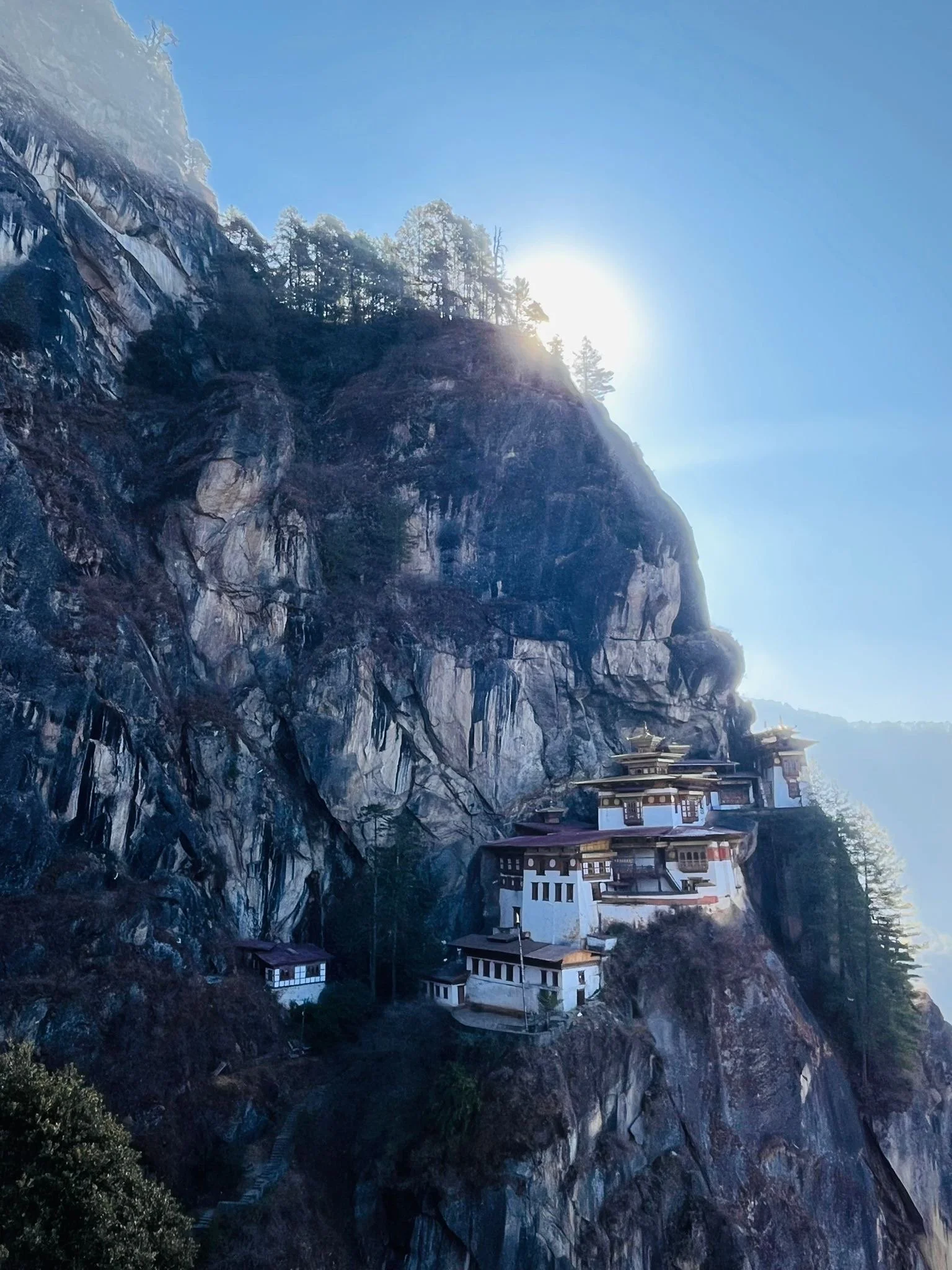
I made it to Bhutan — the Land of the Thunder Dragon. Wild, green, red, gold, spicy, silent, serene, spiritual and sweet. And I fell in love. Arriving at the start of March, I can’t imagine a better way to welcome spring: an epic adventure, peeking around its corners, discovering new places, and following new routes.
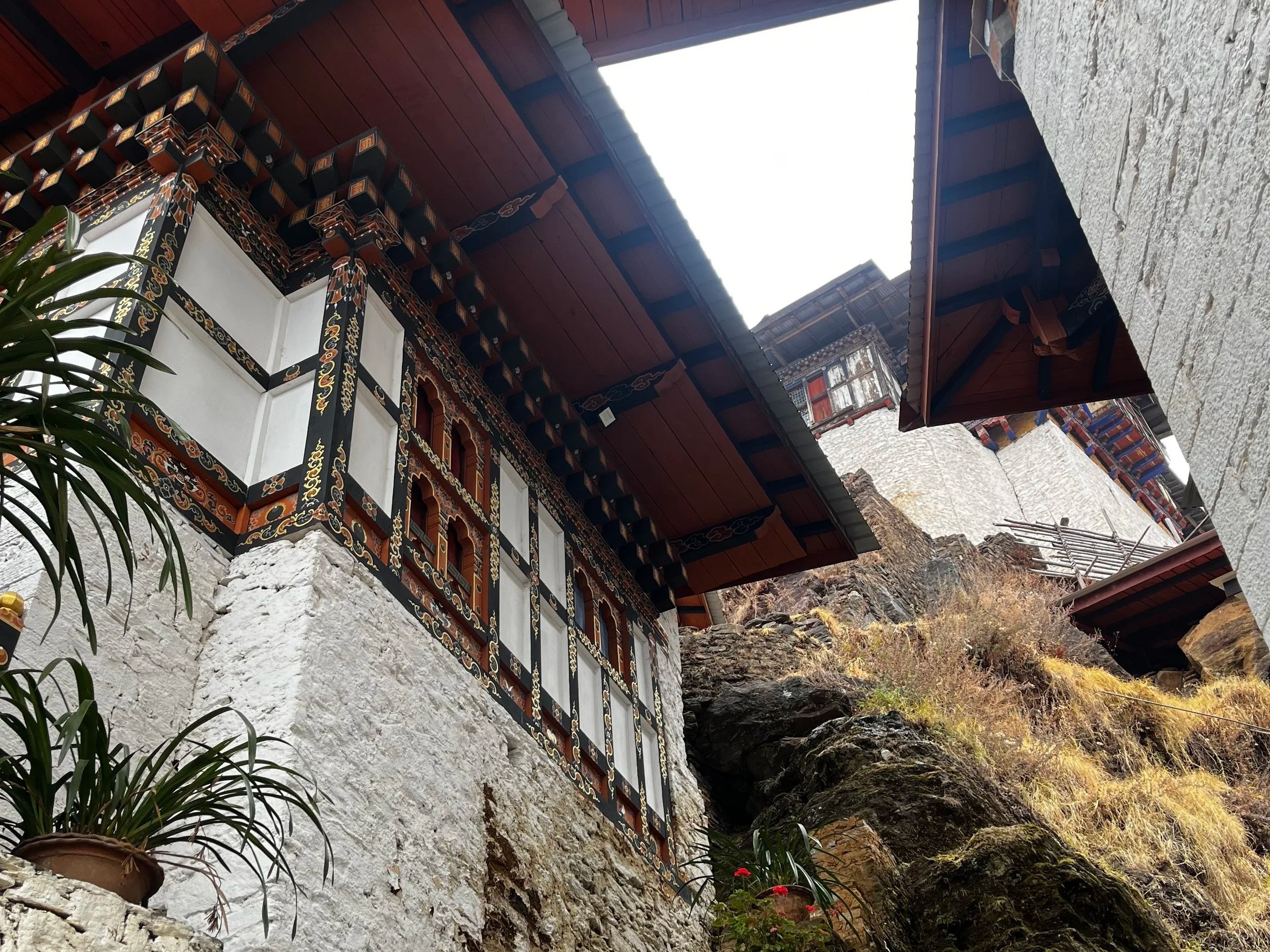
We hiked to 16th-century monasteries tucked into misty hillsides, watching fog curl around and tickle the pine trees. We stepped through red wooden doors decorated with ornate golden plates and freshly painted illustrations of Buddhist gods. Between hikes, we drank mugs of piping-hot, thick ginger tea with peanut butter biscuits and chunky slices of banana bread. It was so freezing I wore my entire suitcase. I fell in love with the mountains. I am in love with Bhutan.
Everything in Bhutan touches your senses. It’s the most incredible place I’ve ever visited. It has that extra tang in the air. Fluttering prayer flags on top of pine-clad mountains. Bombax trees. The scent of incense. I loved the smell of wood smoke and pine forests and open fires, hot stone baths, and hiking in the purest of air, up steep mountains, with the thrill of discovering snow leopard and black bear tracks imprinted in the snow.
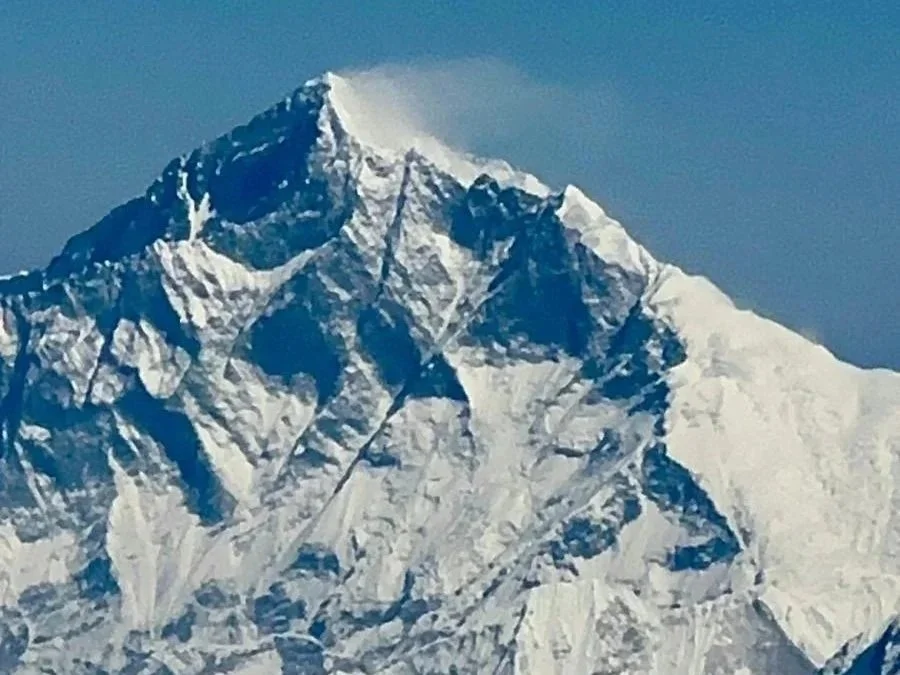
Arrival in Bhutan is spectacular. Only a small number of specially trained pilots are certified to make the landing. As the plane wobbled through the sky, the majestic tips of the Himalayas loomed into view on my left, the unmistakable snow-capped peak of Mount Everest prominent. We dipped below the clouds and swooped in a sweeping loop, and underneath us the rolling pine-clad valleys of Bhutan emerged, leading toward the short landing strip, visible only for moments before touchdown.
Bhutan is a tiny landlocked kingdom sandwiched between India and China. Guided by its Gross National Happiness ethos, it welcomes only a limited number of travellers each year, balancing preservation of its unique culture with the gradual embrace of modernity. Less acknowledged is that Bhutan is the only country in the world that is carbon negative. For the spiritual, the curious, and the adventurous, Bhutan is unlike anywhere else on earth.
Every single valley, every single artery, and everywhere you look is full of spectacular views and special moments. Burgundy-robed monks, spiritual incense-makers, and meditation masters. I was so exhilarated and knew this was the beginning of something that defies imagination. And from the moment I arrived in Druk Yul, Land of the Thunder Dragon, I felt incredibly grateful.
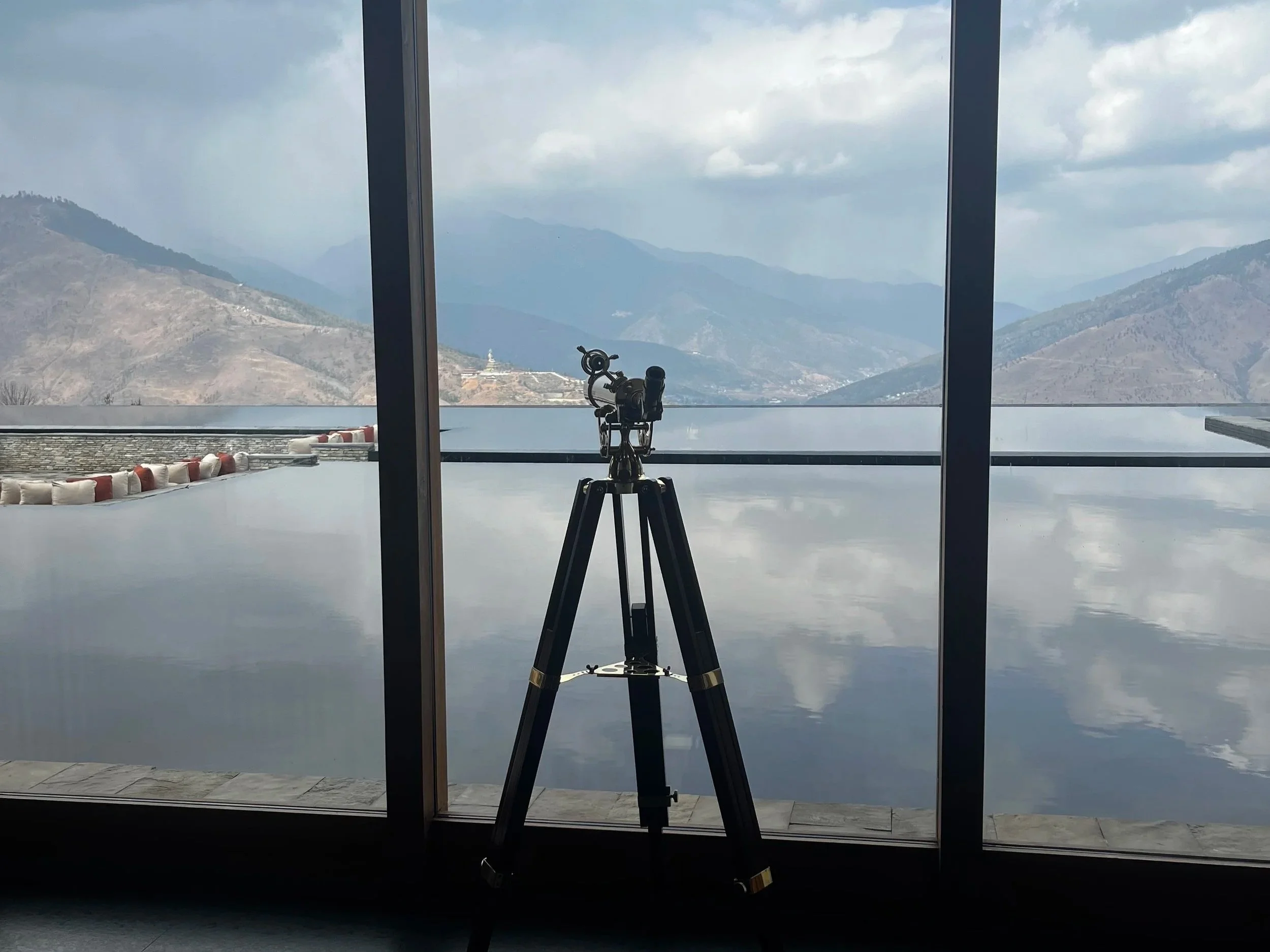
We travelled through the hillsides and valleys of Bhutan staying at the extraordinary Six Senses lodges: Thimphu, Punakha, Gangtey, and Paro. This is not a journey where you pick one lodge and call it done — they are best experienced as a sequence, a journey through the country itself. From the ‘Palace in the Sky’ at Six Senses Thimphu, with its cathedral-like wooden-and-glass interiors and cloud-mirrored reflecting pool, to Punakha’s ‘flying farmhouse’ overlooking terraced rice paddies, rivers, and mountains, and Gangtey positioned at 3,000 metres for unrivalled crane-spotting and rhododendron hikes, each lodge blends breathtaking Himalayan views with cosy comforts — log fires, spa treatments, hot-water bottles at turndown, and Devon-imported mattresses — creating sanctuaries as inspiring as the landscapes that surround them.
There wasn’t a corner we didn’t reach. On our long drives I would watch Bhutan unfold outside the window. The journeys give you a rare perspective as the valleys wind around you, the landscape weaving like a thousand coloured threads of a song before knotting itself into a different tune. Astonishing, perplexing sights and sounds emerged at every turn: Thimphu, where development and urbanisation is evolving, then east through Punakha into the flat, earth-toned Phobjikha Valley, which evokes the landscapes of Mongolia. Here we spotted the elegant black-necked cranes and learned they too respect the quiet rhythm of Bhutanese Buddhist rituals — including circling the valley three times on arrival, clockwise of course!
Temples and monasteries appeared along the way — Changangkha Lhakhang, the Buddha Dordenma, Tango Monastery, Punakha Dzong, and Damchen Lhakhang — alongside the pilgrimage hike to Tiger’s Nest and a Tsechu festival, among many more. Each moment felt imbued with meaning. Claudine, Dr Karma Phuntso, Karun, Young Ten, and Peachy, our wonderful guides and ambassadors, shared extraordinary insights - “yes please” - auspicious numbers, nature details, Buddhist traditions, history, and even facts about sphagnum moss, which thrives in the marshy, high-altitude wetland ecosystem of the Phobjikha Valley. You are endlessly staggered, and it happens countless times every day you are there.
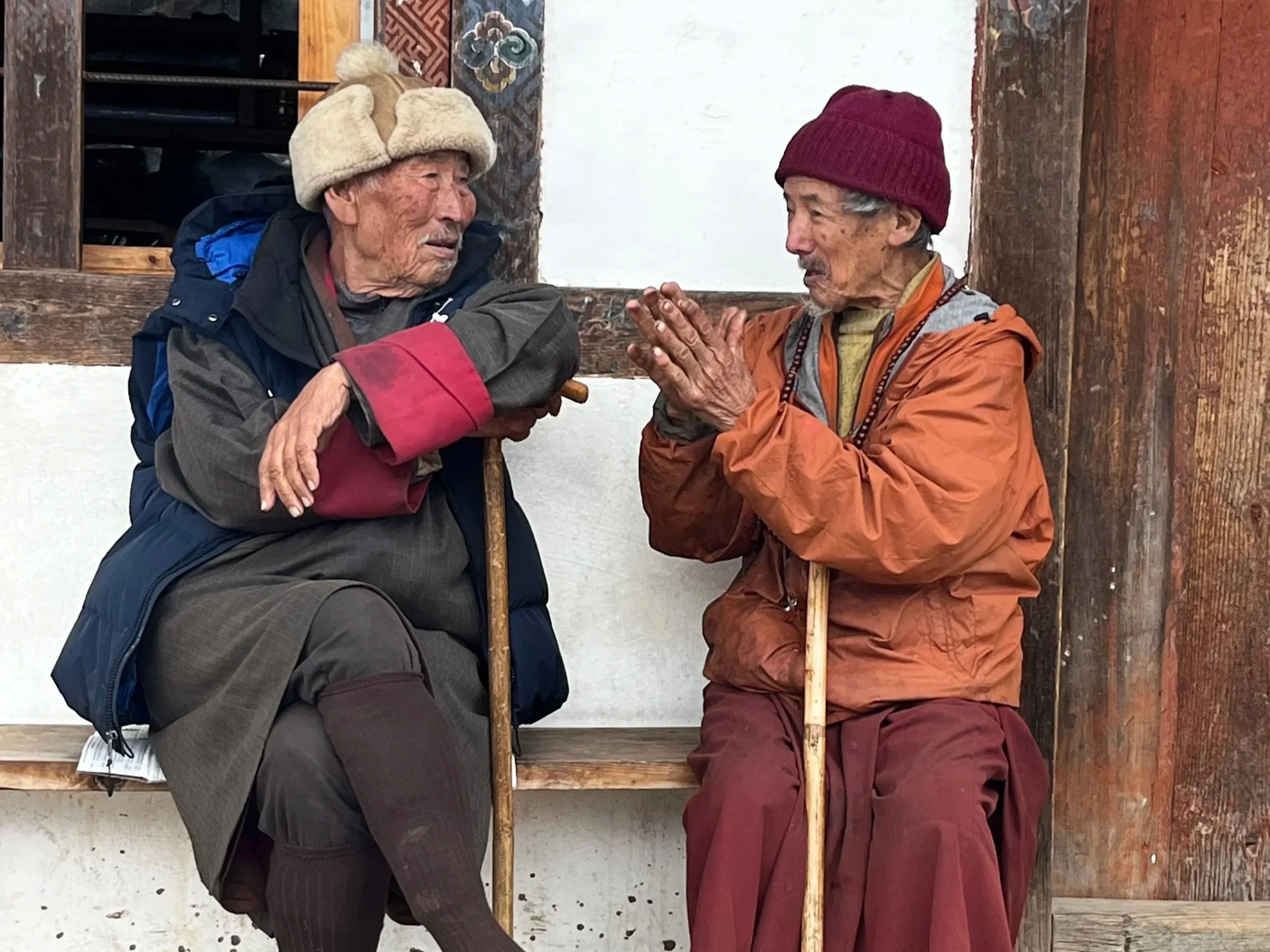
I might be naïve, but I pictured Bhutan as quaint and antiquated — and what I loved was the unexpected, delightful juxtaposition of it all. At times I couldn’t tell if I had gone back in time — the only country with no traffic lights, where everyone wears traditional dress, the kira for women and the gho for men — yet it buzzes with unexpected quirks and freedoms.

Our Lama “Kempo” led early-morning meditation wearing a banana-yellow beanie with a smiley face. Children spun in circles at Changangkha Temple, laughing and touching the ground in prayer. Fluffy, vaccinated dogs trotted alongside us up the hills. We received bracelets in the colours of our birth years and even made our own small ceramic offerings, wedging them into the crumbling walls of ancient ruins. Turnip leaves hung to dry above bubbling pots of red rice. Wild horses cantered across valleys, while archery practice, sound baths, masks and conversations with monks about TikTok and rap music mingled effortlessly with sacred rituals. Festivals erupted with momo-making, dancing and gummy bears. Dinners took place in cowsheds singing along to “Bohemian Rhapsody”. Every corner — from houses painted with phalluses, believed to ward off evil spirits, to prayer-flagged valleys — felt utterly alive, whimsical, and extraordinary.


Bhutan is both grounding and magical — a world apart, yet wildly and curiously real. It was special, heartening, and deeply wholesome.


If you are a traveller who believes travel has the power to change the way you think, Bhutan is one of those places. All you have to do is show up and you are immediately in it. That’s the best part of travel.

If you’re considering Bhutan and want help planning a private journey, I’d love to talk.
https://clarewittontravel.co.uk/contact
Clare xx